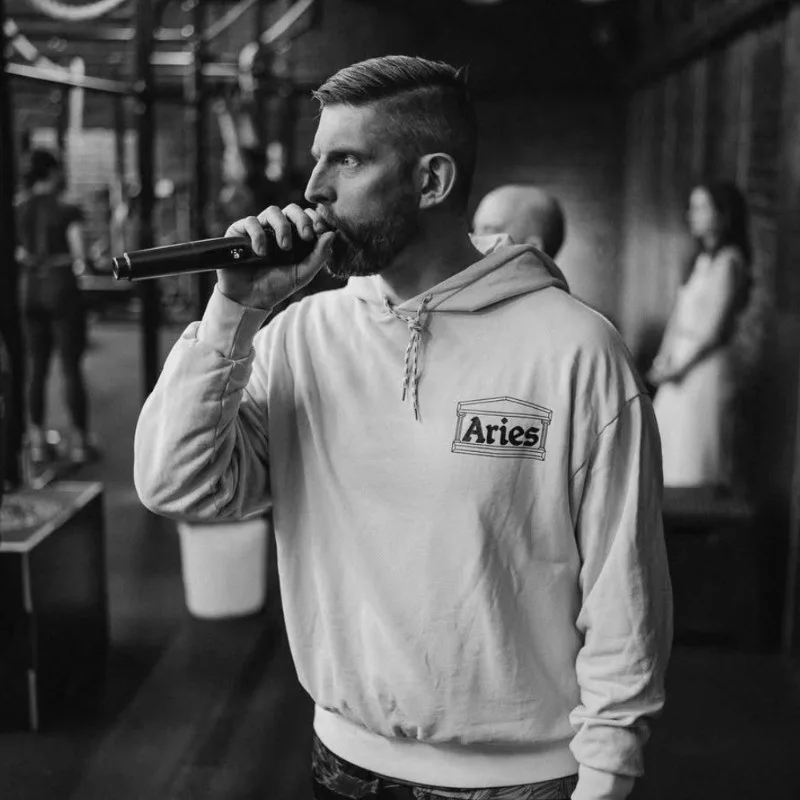
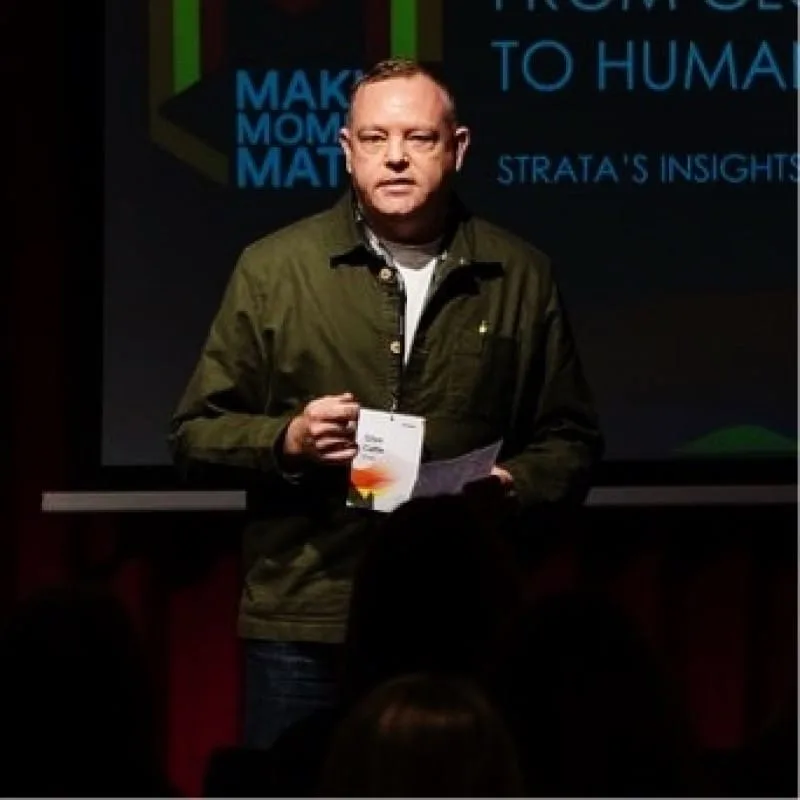
As part of our ongoing Season of Strategy, Laura Whittington, Strata’s Head of Data, is joined by Group Chief Operations Officer Phil Staines to discuss audience psychology and the power of smart data analysis
There are plenty of ways to gauge if your event was a success: attendance, sentiment, pure vibes. But what some organisers are missing is that great events create great data.
When we think about big summer events – the World Cup, F1, Wimbledon, Glastonbury – the energy is unmistakable, even from a distance. If you know where to look, you can see essential context in these events, year to year. An underwhelming Wimbledon that, when you look at the forecast, was plagued by terrible weather. An oddly quiet festival, because politics or oil prices disrupted air travel. For events at this size, we sometimes imagine that they are unaffected by context, but the opposite is true: success is informed by a diverse and fascinating array of data points.
The real value isn’t in looking at one dataset, when it comes to events. It’s understanding how different factors interact to explain behaviour.
Context changes everything
The traditional prediction that England will always lose key football matches in penalties has been upheld by generations of teams, although I’m delighted to say that wasn’t the case this year! As someone who studied sports psychology, I was fascinated to learn about Gareth Southgate’s approach to the problem as manager: he didn’t simply look at whether penalties were scored. He looked at time taken to step in, reactions under pressure, and the psychology of his players.
The more data he gathered, the more insights were revealed with the potential to inform future performance. He found that England had the quickest reaction time of any national team in penalty shootouts, almost rushing1. Without looking at that data point – how quickly penalties were being taken, not just by England but by every national team – that insight might have been lost.
There is a clear parallel here with live events and sponsored events: understanding the ‘why’ behind behaviour, capturing that data, matters as much as measuring the outcome. Learnings from sports psychology often have practical applications when we look at human behaviour more broadly.
“Successful event strategies come from profiling the right people, getting the right insights from them, rather than treating all audiences the same,” adds Phil Staines, Strata’s Chief Operations Officer. “Context is so valuable.”
Before, during, after: building a complete picture
The work of data collection needs to begin from the moment planning starts. Gathering insights into who your audience are, how they act and what they want can begin during the marketing stage, and build as you see who purchases tickets, interacts with pre-event communications and the event website, and who downloads and interacts with any delegate apps or other supporting content. Travel patterns, weather forecasts and geopolitics are useful to build in to your planning, to understand how the event can be best supported.
During the event itself, data collection doesn’t pause, especially in those at great scale like big summer experiences. Crowd movement, social media use, attendance at on-site amenities, activation engagement… these data points can provide fascinating insights and direct leads.
After the event, in addition to post-event communications, there’s now an opportunity to put all your data to work. To understand what truly drove the outcomes seen on the ground. This is where we see that Wimbledon literally performs better some years because the weather materially changes attendee behaviour, and public willingness to join the ticket queue.
When you overlay data – weather, travel, attendance and engagement, for example, you stop guessing and start understanding.
Mia: AI turning insight into action
It’s this logic that helped me and my team to design Mia, Strata’s AI-supported data management tool. Mia connects disparate sources and uncovers patterns humans may miss, and it is custom-built to each client who uses it, to ensure we’re helping organisations to move strategically beyond hindsight and towards predictive insight.
Mia can identify likely behaviours, emerging risks and opportunities in real time. “Mia can help brands with the simplest question, but arguably the most important,” Phil explains. “What should we do next?”
Beyond traditional demographics
When we consider large-scale and strategically designed events, it becomes clear that the future of data is behavioural. As we are able to move beyond traditional demographic tools like age, location or job title, we enter a much more interesting playing field: understanding motivations, sentiment, and the psychology behind decision-making.
I’m seeing emerging opportunities in data analysis around brand sentiment tracking, audience reactions and real-time behavioural signals. Tools that can analyse facial expressions, pulse and body heat, or draw behavioural data down from user’s phone use within event venues. The biggest opportunities come when organisers understand not just what happened, but why audiences behaved the way that they did.
Live events are the gold standard for gathering real audience data, even for brands that exist primarily online – there’s a reason why brands like Shein and ASOS are investing in pop-ups on Oxford street!2 Online interactions can only tell you so much; data from people in real life, interacting physically with your brand, is more powerful.
Getting the right data, the best data, is the first step, but impact comes from what you’d do next. “No matter the quality of your data, if you’re collecting data and not using it to make better decisions, what’s the purpose of having it in the first place?” concludes Phil.
Laura Whittington is Head of Data at Strata. A skilled project manager, she excels at delivering digital solutions to complex client problems, including leveraging AI to produce bespoke tools.
- https://www.theguardian.com/football/2018/jul/05/england-gareth-southgate-penalties-overcome-hoodoo
- https://www.timeout.com/london/news/asos-physical-store-london-062326
Alex Didlick (Project Coordinator) discusses innovation, AI and what MAD//Fest 2026 had to offer. Discover his key highlights as an early career events and experiences professional.
On a sweltering July day, it felt as though the marketing and advertising world had temporarily relocated to a small corner of North London. The reward for braving a packed underground, was an eclectic mix of speakers and fireside chats from industry leaders, helping to develop my understanding of the ever-evolving world of marketing, and creative brand experiences. What followed was a day full of fresh perspectives, thought-provoking conversations, and four ideas that have stayed with me ever since.
Designing for the path of desire
One of the strongest messages I took away was from a chat between David Shulman (Global CEO Havas), Ben Richards (Global Head of Experience, Lego Group) and Claire MacArthur (Landscape Designer Studio MacArthur). Their discussion explored the ‘path of desire’. Rather than dictating customer behaviour, the most effective brand experiences remove friction, and support how people naturally think, feel and act.
It sounds simple, but instead of forcing audiences to adapt to a campaign, brands should remove guardrails and make engagement feel more intuitive. Reading Strata’s own perspective afterwards reinforced this point ‘attention isn’t about volume, it’s about receptivity.’ Reflecting how naturally coexisting in people’s lives is often where the most success can be found.
For those working in brand experience, these principles are powerful in my view. In a world where audiences are exposed to countless messages every day, the best campaigns won’t force participation. They create authentic environments where engagement feels natural and rewarding. This idea aligns closely with a point made by Giles Cattle (Chief Growth Officer, Strata), who spoke in an article about his belief that the most impactful experiences aren’t just attended they’re shared. It’s those shared moments that create meaningful memories and emotional connections that endure long after an event.
The rise of creator-led marketing
Another recurring theme throughout my day was the importance and development of the creator marketing space. Youtube’s Izzy Ngo, detailed how creator advertising expenditure is growing four times faster than traditional advertising, underlining how important the industry is becoming. Ben Carter (CMO, CarWow), reinforced this message later in the day as he asserted, creator marketing was his number one development in the industry for 2026 and beyond.
It’s also been proven that creators are building long-term relationships with audiences, Ngo noted how 80% of viewers return to the same creator again. For brands, this is perhaps the most important facet creators can bring. By building campaigns around a community, a creator has already established, we can create an experience that feels more authentic, relevant and meaningful to that audience. David Powell (Commercial Director, Wonderland, part of the Strata Group) touched on this in a recent article. He notes the revolutionary impact truly understanding an audience and their interests can have on the success of a campaign.
A word on AI
It wouldn’t be 2026 without plenty of intrigue about the world of AI, specifically its applications in our industry. It was fascinating to hear how different organisations are choosing to implement it.
One example from Ben Carter (CMO, CarWow), described how they have adopted an ‘AI-first’ approach. Rather than replacing people, they focus on identifying repetitive, time-consuming tasks that can be completed more efficiently by AI, freeing up time to be spent on more creative and strategic thinking tasks. Interestingly, they have also begun an AI show-and-tell session once a month for all employees, allowing teams to share practical ways they’re using new tools. This I felt was very valuable, as it shifts the narrative from being intimidated by this new software into a collaborative, team building asset.
Another session however, was much more cautious of AI and its practical uses. Research by Havas’ AI operations department, undertook a consumer poll that indicated 50% of consumers felt the use of AI by brands feels cold, and further 56% also noting it felt misleading when used. This raises important questions regarding trust and authenticity.
The overall takeaway wasn’t that brands should avoid AI altogether (obviously!). Rather, it should be used in instances where it adds genuine value, from broad research tasks to improving efficiency. This will ensure the human element remains central and even elevates our ability to create lasting and important experiences.
The power of behavioural science
Behavioural scientist author, Richard Shotten, captivated a packed audience with his application of psychology within marketing, drawing upon insights to illustrate how it can impact engagement.
One example demonstrated how introducing a simple ritual before eating a chocolate bar- asking recipients to look at it and break it apart etc- reported an increase in enjoyment of 16%. Whilst, most brands don’t sell delicious chocolate bars, the learnings can be taken elsewhere. Creating tension, storylines and intrigue can boost an experience for stakeholders, journalists and customers.
Shotten also explored how acknowledging a genuine flaw can make brands more appealing. A restaurant review that acknowledges a shortcoming within an on the whole positive review, counter intuitively is much more likely to be listened to and received by others. He also incorporated Guinness’ famous ‘good things come to those who wait,’ campaign as an example of transforming a potential weakness into a successful campaign.
It was a lesson that successful experiences aren’t only built through creativity and their substance. By picking up on subtle behavioural quirks and tendencies, we can create campaigns that leave a lasting impression. This is something Strata are truly leaning into with their exciting new partnership with Lea Karam Founder of Mindscope through The Experience Labs which looks at how brands can truly lean into the behaviours of their audiences to maximise their experience and ultimately their connection to the brand.
Final takeaways
Reflecting on my first MAD//Fest, the biggest takeaway wasn’t a single statistic or campaign. Rather it was how every conversation, regardless of topic, ultimately centred on people.
Innovation will undoubtedly continue to reshape marketing, but the brands that will find the most success will be those that combine new technologies with a genuine understanding of human behaviours.
Continuing my journey with Strata, that’s the lesson that will stick with me, regardless of the experience or campaign, it’s about reminded oneself that people are always at the heart of everything we are trying to achieve.
Alex Didlick is a Project Coordinator at Strata, working closely with the marketing team and supporting in content development for events and experience clients. He has a background in journalism and is passionate about supporting other early career marketing professionals.
As part of A Season of Strategy, Dave Powell, Commercial Director at Wonderland (part of The Strata Group), talks authenticity, culture and why the brands that contribute real value win.
At the time of writing, London is at boiling point. It’s not just due to the current heatwave that makes the tube even more unbearable but the feverous nature that the FIFA World Cup bringing to the city. A metropolis of cultures and passions where you’ll expect to see every kind of flag and football shirt populate this great city. “When combined with the spectacle of Wimbledon, a series of amazing day festivals and major artists bringing the party to the big smoke (we see you, Mr Worldwide) not to forget the eclectic mix of blockbuster movies about to blow up the box office, we are at a cultural maelstrom where the live thrives and people truly embrace coming together,” enthuses Dave Powell, Commercial Director at Wonderland (part of The Strata Group).
“Now when you put that brand hat on, you find yourself in a quandary,” Powell continues. “How do you show up in these key moments? Simply tagging along to a big moment doesn’t deliver that immediate relevance.” Exposure without participation can risk feeling generic, and there is an art to authenticity that is difficult to force. Authenticity comes from a place of contribution, not just presence, and that’s what the team at Wonderland and colleagues in the wider Strata Group have been thinking about lately: how brands can achieve their goals with real authenticity.
Culture is where authenticity lives
Real engagement sits with communities, not audiences. The art is to unlock these connections at intuitive entry points that feel, if you know where to look as a brand.
“As a lover of heavy music who has a Crossfit addiction, I can spot a kindred spirit on a crowded Tube platform when I spy a tattoo of the iconic lightning bolt M of the Metallica logo or trust someone wearing R.A.D trainers will happily compare their Workout of the Day with me,” explains Powell. “By tapping into the energy that is already there, rather than attempting to manufacture it, brands can find that sweet spot of contributing to an existing culture and forging authentic connections without crowding the moment.“
A fantastic example is Nike’s collaboration with Palace Skateboards1. Yes, Nike can afford to launch a massive campaign around the World Cup – Rip The Script2, their 2026 campaign, is a truly impressive display of star power – but they also understand the power of grassroots. Palace is a London-based streetwear and skateboarding brand, and together with Nike they opened Manor Place: a revitalized heritage building in South London, now a sport, creativity and community hub open six days a week and totally free to use. The collaboration element means Nike is spoken in the same breath as a brand whose identity is around street style, enmeshed with the city’s subculture of skateboarding and football, specific to London, and the social investment won’t be forgotten by the locals who benefit from the space.
“The project puts cultural perspective first, and that’s why it’s memorable,” says Powell. “These two pathways then merge for the mases when Nike and Palace drop an extremely limited run of football shirts and apparel for the England Football team as well as utilising the partnership to created as the official England training kit at the World Cup, heralding what originally started its journey at a grassroots level to be finally delivered on the world’s biggest stage.”
Participation drives deeper connection
Events and experiences drive deeper emotional equity, not just reach. By putting the community element of activations before the broadcast element, the strategy gains cultural credibility, particularly in sports, which are amazing social equalisers.
“At Wonderland, we worked with Olympic Gold Medalist Keely Hodgkinson to celebrate the launch of Nike’s Vomero 18 running shoe, taking her home to her childhood club in Manchester. Keely led a community focused running event with 7 local running crews and Sports Direct Manchester employees3,” says Powell. “We could have put Keely anywhere, but by taking her home, it meant the audience around her was buzzing with excitement and energy, and the user-generated content (UGC) was authentic and pitch-perfect. The moment was right – the launch of the shoe – but the place and the audience had to be right, too.“
Chris Vernon-Smith, Creative Director at On Event Production Co, who along with Wonderland sit within The Strata Group, agrees. “There’s another element to consider, once you’ve got the right moment and the right audience,” Vernon-Smith explains. “Great live event production makes participation feel easy and accessible, and from that, you get great engagement. By getting the audio and staging right, you can make an event feel elevated, polished and experiential, and let the audience really take in your message.”
Scale should follow the moment
Not everything needs to be ‘Superbowl-big’; by taking a considered approach to the culture surrounding the moment you want to feature, you can correctly find your scale and the ‘volume’ at which you want to speak to your chosen audience. Sometimes, big is appropriate. “When we organised for Mr. Beast to hold a ‘Willy Wonka-style’ giveaway outside the Sydney Opera House to celebrate the relaunch of Feastables in Australia, we weren’t aiming for subtle.4 It would honestly have been off-brand! But while loud and flashy has its place, smaller, sharper moments with true authenticity can actually land harder,” explains Powell.
The truth acknowledged within the industry is that lasting positive brand associations are earned rather than engineered. Trust is built with the right collaborators and the right communities – there is significantly more value, particularly in the age of AI, in true UGC rather than forced content.
Hellman’s (yes, the mayonnaise) managed this impressively when Charlie XCX defended a banned poster during the height of brat summer – the regulators banned her original UK area tour poster, and she responded that it was just displaying ‘a sandwich bag’, encouraging fans to bring their own sandwiches to her show. Hellmans handed out free ‘Club Classic’ sandwiches to fans queuing to enter the area in clear, brat-inspired branded bags that immediately became limited-edition fan items.5
The brand took a risk, put their finger on the pulse of the zeitgeist, and successfully connected with an audience ready to be vocal and get excited. “We’re being asked by clients more and more to create ‘fan zones’ and other production solutions that promote non-staged participation moments,” describes Vernon-Smith. “Even at bigger events, if you can find a moment where people have the time and the energy to engage, you can create designs that get amazing authentic participation.”
Final thought
Sporting events like the World Cup are great unifiers; brands should plan to add value, rather than attempt to share the spotlight or steal focus. By building a strategy around culture as currency, existing communities can become engaged audiences.
“During my time here at Wonderland, I’ve come to believe that the truth is this: people engage with what brands enable, not what they say,” concludes Powell. “Sportswear that truly enables young people to kick a ball or run around a track with their friends. Sandwiches that spark a conversation and make sure you’re fueled, heading into a high-energy gig.
It’s as simple as this: no matter the scale you’re working with, be honest. Show up and give back. The results will follow.”
Dave Powell is Commercial Director at Wonderland, part of The Strata Group. He is an experienced Creative Strategist with a demonstrated history of working in the marketing and advertising industry. He has a strong business development background in Brand Experience Strategy, Marketing Strategy, Youth Marketing, Social Media, and Digital Media.
References
- https://about.nike.com/en/newsroom/releases/nike-palace-manor-place-announcement-official-images Last accessed 23.06.26
- https://about.nike.com/en/newsroom/releases/nike-debuts-rip-the-script-a-step-inside-the-universe-of-nike-football Last accessed 23.06.26
- https://www.instagram.com/p/DLC5JzBoCa7/ Last accessed 23.06.26
- https://www.wonderland-agency.com/work/mr-beast Last accessed 23.06.26
- https://www.mackgire.com/hellmanns-x-charli-xcx
As part of A Season of Strategy, Giles Cattle (Chief Growth Officer at Strata) and Lea Karam (Founder and CEO at Mindscope) discuss what makes experiences memorable, and why that recall is so valuable to brands.
Live moments act as modern rituals. They bring people into a shared emotional context, creating a level of connection that fragmented digital channels struggle to replicate. At their best, live experiences don’t just capture attention; they stay with people. They impact how we think, what we recall, and what we carry forward. Now more than ever a strategic shift is necessary: away from attention, towards memory.
Shared emotional peaks
Live events create emotional peaks; moments that stand out because of their intensity. What makes these moments valuable to brands isn’t just how they are felt, it’s how they are shared, both in the moment and afterwards.
“Too many experiences are designed for the moment and forgotten soon after,” says Giles Cattle, Chief Growth Officer at Strata. “If a moment isn’t remembered, it hasn’t delivered its full value. The focus now needs to shift from capturing attention to creating something that lasts.”
Memory is stronger when it’s social
Memory is not formed in isolation: it’s reinforced through social interaction. What we talk about afterwards, what we revisit, what we debate; these are the mechanisms that strengthen recall. They also shape perception and meaning over time.
Equally important is how ideas spread. People are more prone to adopt behaviours through imitation than instruction; no one is taught the latest slang, yet it is gradually folded into our collective lexicon through imitation. Live environments accelerate this because behaviour is visible, shared and repeatable in real time. When you don’t know a football chant in the stands, you listen, learn, and imitate. And at the next game, you remember.
“When people recall a powerful experience, they can recreate the emotional state of being there,” says Lea Karam, Founder and CEO at Mindscope. This principle underpins The Experience Lab, a collaboration between Mindscope and Strata exploring how live moments can be designed to be not just impactful in the moment, but remembered long after.
“Experiences that are social, time-bound and emotionally intense are far more likely to stay with us and we need to be designing experiences for that,” explains Karam. Live sporting events include all three: whether in the stands or watching at home, people remember for a lifetime the moment their team was victorious.
The intense emotion around experiences like the World Cup is felt before, during and after. Brands see excellent results from campaigns that strategically add to the maelstrom of feelings, from referencing childhood memories to deliberately building on – and aligning with – the sense of excitement. This year, Adidas’ ‘Backyard Legends’ campaign was focused on street football and 90s nostalgia, with de-aged versions of icons like David Beckham, capturing social memory by referencing the beloved football of childhood rather than just sleek corporate inspiration.1
Making identity tangible
Live experiences also have the power to make abstract identities feel real. Whether it’s national identity, brand affiliation or belonging to a cause, these ideas only become meaningful when they are experienced. Events turn them into something tangible, through atmosphere, shared language and collective participation.
In doing so, they allow people to see themselves as part of something larger; not just as individuals but as members of a group with a shared understanding. Identities that exist in the abstract – being English, being a music-lover, supporting women’s sports – are suddenly tangible and real during the peak moments of events. The audience in the stands of the football arena, in the crowd at Glastonbury, watching the finals of the women’s singles at Wimbledon… they are all part of a community that is experiencing something simultaneously, and that feeling will be remembered.
The recent turnout of around 1million people – double predicted numbers – at the parade celebrating Arsenal’s first Premier League win since 2004 shows how many people consider themselves aligned not just with the sport, but specifically with Arsenal as a club, as a community and as a brand.2
The value happens after the event
The impact of live experience extends well beyond the moment itself. Highlights are replayed. Conversations continue. Opinions form and evolve. Teams reference moments internally. Audiences share and reinterpret what they experienced.
This after-effect is not incidental; it’s where value compounds. Experiences that are talked about, retold and revisited become embedded in memory and culture. That unbelievable goal, that ‘you had to be there’ moment at a gig – these are the experiences people are keen to discuss and bond over and therefore are far more likely to remember. Conversations can happen in-person or online; user-generated content like memes, reviews and online discussion is an incredibly powerful tool for raising campaign visibility and ensuring it makes a real impact.
“Memory is not individual, it is social,” Karam adds. “The things we talk about and revisit together are the things that endure. The real impact of an experience often happens after the audience has left.”
Big brands are rightly focused on user generated content and the power of memes; when the moment is replayed over and over, shared and recalled, it is remembered with clarity.
A unifying force in a fragmented world
In a fragmented, on-demand landscape, live experiences offer something increasingly rare: unity. They create shared reference points. They align audiences quickly. And they give brands a way to make strategy tangible, particularly at high-stakes moments such as launches or repositioning.
“Experiential has a strategic role to play when the stakes are high,” Cattle says. “It’s not just about communication. It’s about creating shared understanding and building trust quickly.”
As digital channels become more crowded, the brands that stand out will be those that move beyond short-term engagement and focus on what people remember… and what they share.
“Content is everywhere,” Cattle concludes. “Experiences that are memorable are rarer, and therefore more powerful. The opportunity is in creating something people carry forward, together.”
Lea Karam is the multi-award-winning behavioural scientist the world’s biggest brands and platforms call to solve challenges amidst changing cultural and technological landscapes. Through founding Mindscope, she built the behavioural science labs behind their biggest bets. Lea is one of the industry’s most-booked keynote voices, ranging from bespoke brand and corporate events to all the major industry stages, including Cannes Lions, SXSW, MIPCOM, the Royal Television Society and MAD//Fest.
Giles Cattle is Chief Growth Officer at Strata. A Creative Strategist, he uses insights to fuel the creative design of experiences and communications to engage, inspire and persuade audiences.
He brings brands and people closer together, and using every channel, internal or external, to achieve that.
He has extensive experience working with global clients spanning multiple sectors, targeting multiple audiences through multiple channels.
References:
- Adidas, Burberry and so much Beckham: The six best 2026 World Cup ad campaigns
- Massive turnout for Arsenal parade as dozens require rescue from high places | ITV News
As part of A Season of Strategy, Michael Wryley-Birch (Strata president and Group managing director, growth and strategy) and Chris Pearson (Client Services Director at Element) discuss how brands can successfully seize culturally significant moments in an authentic way.
“A few years ago, my team ran an interactive window display for a household-name brand at their Oxford Street flagship store,” says Michael Wryley-Birch, Strata president and Group managing director, growth and strategy. “The display encouraged passers-by to dance, and it was equipped with cameras and sensors so that we could track audience participation; at the time, a pretty new and nifty piece of tech.”
When Wryley-Birch’s team sat down to assess the data, the results were surprising. At busy times, vanishingly few people stopped to interact. In fact, the clear and consistent peak time for the display was at 6 in the morning on a weekday.
“The reality was that no one wanted to hold up traffic and participate during peak hours. No one wanted to stop their own mission – shopping, socialising, running errands – to take part in ours,” Wryley-Birch explains. “People were willing to take part when they naturally had down time. They were waiting for the bus to take them to work.”
In 2026, that sort of technology is built into the majority of experiences designed by Strata, and it provides detailed information about our diverse and fascinating audiences.
The message was clear: attention isn’t about volume, it’s about receptivity.
The problem with ‘big moments’
As we head into a summer absolutely packed with big sporting and cultural events – events like the FIFA World Cup, Wimbledon and various music festivals – Wryley-Birch advises brands to think twice about their instinct to show up during the loudest, most crowded moment.
“While it makes sense to link your brand to a moment of heightened awareness, it is near impossible to gain positive attention at the peak of a moment that belongs to someone else,” he explains. “Like Oxford Street on a sunny Saturday afternoon, these moments are saturated, noisy and often intrusive for people who aren’t on the bandwagon.”
Anticipation and afterglow
The solution? Find your own space: your own 6am slot waiting for the bus.
This is where a moment-based approach becomes practical. One agency that forms part of The Strata Group is Element, who work with major brands to provide prizes, incentives and rewards. Chris Pearson, Client Services Director at Element, explains the value of what he calls anticipation and afterglow.
“We work with many brands who offer tickets to these big summer events as prizes,” Pearson says, “and they’re great, but we always advise them not to miss opportunities to make good into great. When we design incentive trips, we don’t just get people to Latitude or Reading Festival. We make sure they have all the camping gear they’ll need – we combine the prize with vouchers for festival essentials like new clothes. We make sure they have travel home, as well.”
Water doesn’t feel valuable – until you’re baking in the sun and someone offers you a cold drink. Holidays are the most memorable either when they’re plagued by travel disasters or rich with bucket-list items.
“My point is that by thinking through these moments that surround the big moment, brands can gain attention in a really authentic way,” Pearson summarises. “There’s something to be said about treating a smaller group to a better experience.”
In the anticipation phase, brands can build excitement. Marketing can be around helping to prepare, plan or feel a part of the event early. In the moment, it’s about avoiding interruption; enhancing, rather than competing.
“It’s after the event that memory and meaning is really formed,” Pearson concludes. “That’s where you have the opportunity for reflection and sharing.”
Design for real human moments
At their best, events and experiences are moments of delight, and whether brands are designing professional congresses or brand activations, the same principles stand. By introducing small moments that solve real friction, events become optimised and memorable, easing the way for the core messages to be received and recalled. Some principles are universal: reduce waiting times, improve the experience of travelling to and from the event, and plan for the post-event lull. When brands chase the biggest moment, especially surrounding these large-scale events like football tournaments or festivals, they miss out on the opportunity to identify and plan for the most meaningful moments. Often, the biggest gains come from the least glamourous fixes: optimising things that others overlook.
“Success comes from understanding mindset, spotting overlooked opportunities, and showing up with relevance and authenticity,” says Wryley-Birch. “I recall watching back footage of sleepy commuters dancing in front of that Oxford Street window, and thinking that it looked like a lot of fun – it was just a moment in their day, but one I’m sure they spoke about when they got to the office later. “
“The brands we remember aren’t usually the ones that shout the loudest; they’re the ones that met us where we were, at exactly the right moment.”
Ready to go further? Follow Strata on LinkedIn for A Season of Strategy, exploring human behaviour, strategic event design and how to build a measurement strategy that goes well beyond ROI.
Want to get in touch? Drop us a line at [email protected]
In summer 2026, global attention will centre around a handful of shared, high-profile moments. But few brands are ready for what that really means. It’s no longer enough to simply target audiences: brands need to show up with intent in the moments that matter most.
For the next few months, live sporting events – the FIFA World Cup, Wimbledon, the Grand Prix – sit alongside festivals and cultural moments to create something bigger: millions of people watching, reacting in real time, and feeling part of something shared.
Many brands still plan for these moments in the same way they always have, through reach, impressions and visibility. But this is where traditional planning falls short. Because the World Cup isn’t just a media moment, it’s a behavioural one.
Strata’s Executive Creative Director, Matt Cole, explains: “Data, and the numbers, will only get you so far when planning for something like the World Cup, because your die-hard fan’s connection to the sport on the best of days is pure, almost irrational, passion.
Yes, they’ll tell you it’s all about the stats & tactics, but at the end of the day they’re in it for the heart pounding, emotional rollercoaster and the tribal connection of supporting their team.”
And what also makes these events unique is that they’re not just for the hardcore fans, they’re for the people turning up for the occasion. That opens the door for brands to reach new audiences, not through targeting, but by being part of something people already care about. It’s the shared build-up, the atmosphere, and the simple pull of wanting to be there that creates the opportunity.
THE VALUE OF EXPERIENCE DOESN’T LIE IN REACH ALONE
Events and live experiences create moments where behaviour shifts at scale. Emotion increases cognitive encoding making messages more memorable, while shared moments reinforce meaning through social connection from colleagues and friends to wider communities and online platforms.
That’s what makes global events like the World Cup and Glastonbury such powerful engagement opportunities. There is urgency, anticipation and unpredictability built in. While some brands still rely on metrics such as impressions and reach, others are creating something far more effective.
Cole continues, “When it comes to the World Cup, when you add in the rest of the punters, most of whom only watch the footie once every 4 years, it becomes something even more primal, the unmitigated joy of connecting with the entire country to crack open a beverage of choice and scream in union at the telly for 90 minutes. To remind ourselves that we can all believe in the same thing for a moment despite our differences.
As brands, you can’t rationalise that, you can’t even ask ChatGPT how to connect with this audience, you need to feel it. And the great thing is, as human beings, we can all do that, can’t we?
Strategic emotional resonance though? That might be another ball game.”
THE CLEAR STRATEGIC OPPORTUNITY FOR BRANDS
Mass-reach events like the World Cup are a rare opportunity for brands; an environment where behaviour, emotion and attention align at scale. That alignment presents the opportunity, but only if approached deliberately.
To get the most out of these moments, brands need to think about the full build-up, not just the moment itself. It’s about creating a sense of anticipation, using content, social and storytelling to get people interested and involved early. The brand needs to be positioned as part of the upcoming experience whether it’s the small intimate events in your local pub or mass activations by the biggest brands in the world. Timing is key.
When the moment is happening, the role of the brand is to become part of it. For example, the energy doesn’t sit alone inside the tennis court during Wimbledon, it spills out onto Henman Hill, into fan zones, city spaces, and shared viewing experiences where people come together. The brands that stand out are the ones that create places and moments people want to be part of.
Afterwards, the opportunity is to carry that feeling forward. What the World Cup does well is keep people talking with the best moments replayed, shared, and built on long after the final whistle. Brands can take the same approach with their own events: bring people back together, create follow-on moments, and deepen the connections that started there. Sometimes that’s broad and social, other times it’s more focused smaller groups, communities, or conversations that keep the experience alive in a more meaningful way. Success isn’t just about how many people showed up, but what stayed with them and what they chose to do with it afterwards.
Part of what makes these moments so powerful is that they’re not always easy or instant. From queuing for Wimbledon tickets to waiting for a spot in a fan zone, there’s a sense that you’ve earned your place in it. That anticipation, the build-up, and that afterglow all add to the value of the experience. Being part of something shared feels more meaningful when people have actively chosen to be there, and that’s what makes it memorable.
Cole concludes, “Whether it’s The World Cup or any other cultural milestone, to engage with fans brands have to behave like fans, share the love and bring something meaningful to the party. Demonstrate that your brand isn’t just a badge, it’s a facilitator of the experiences they live for and can make the moments they love even better.”
Ready to go further? Follow Strata on LinkedIn for A Season of Strategy, exploring human behaviour, strategic event design and how to build a measurement strategy that goes well beyond ROI.
Want to get in touch? Drop us a line at [email protected]
Proud to deliver lasting moments for...
Let’s have
a chat!
Every brand touchpoint is a moment that matters. A chance to strengthen your message with clarity and relevance. To make your audience feel like they're part of something extraordinary, get in touch.