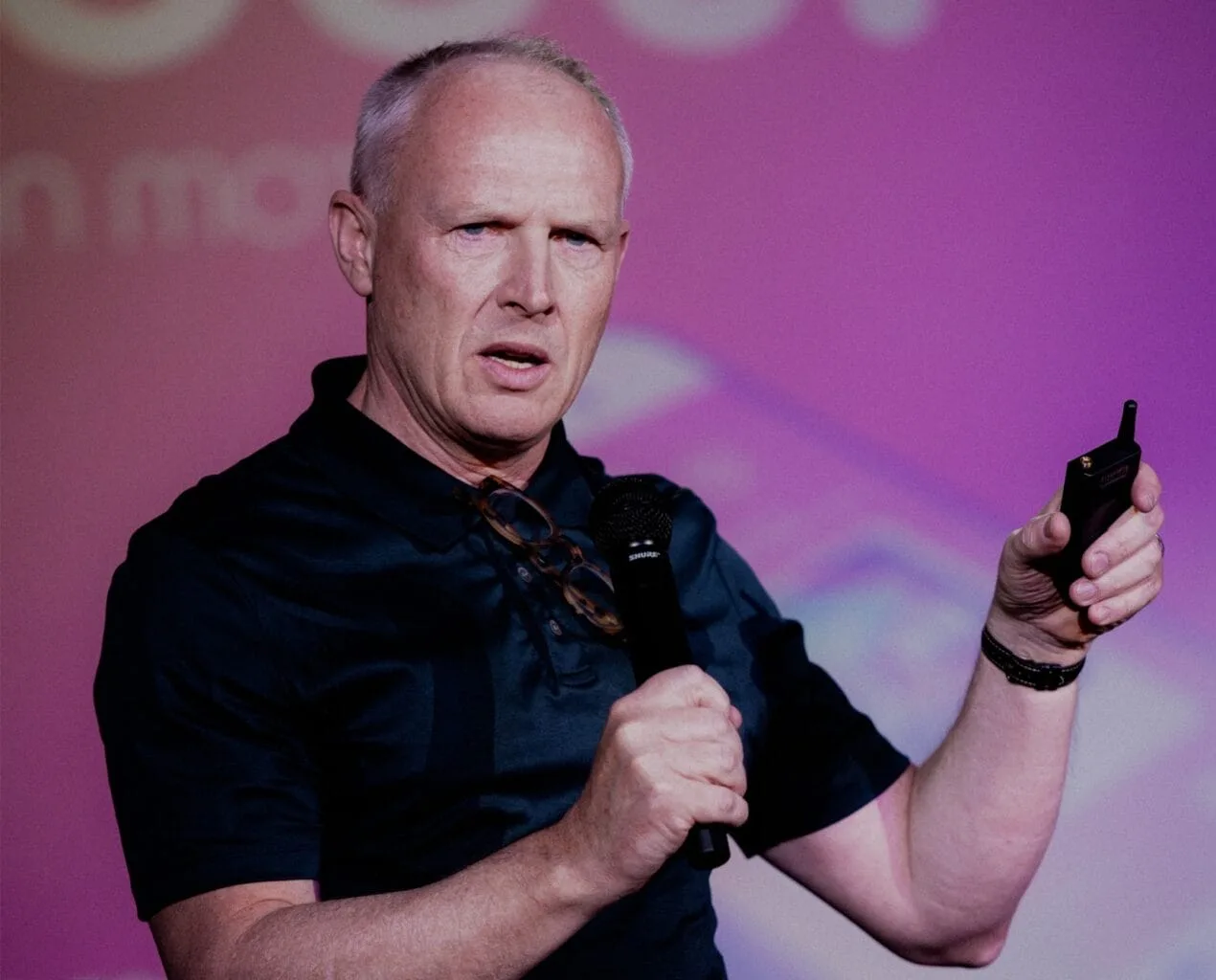
As part of A Season of Strategy, Michael Wryley-Birch (Strata president and Group managing director, growth and strategy) and Chris Pearson (Client Services Director at Element) discuss how brands can successfully seize culturally significant moments in an authentic way.
“A few years ago, my team ran an interactive window display for a household-name brand at their Oxford Street flagship store,” says Michael Wryley-Birch, Strata president and Group managing director, growth and strategy. “The display encouraged passers-by to dance, and it was equipped with cameras and sensors so that we could track audience participation; at the time, a pretty new and nifty piece of tech.”
When Wryley-Birch’s team sat down to assess the data, the results were surprising. At busy times, vanishingly few people stopped to interact. In fact, the clear and consistent peak time for the display was at 6 in the morning on a weekday.
“The reality was that no one wanted to hold up traffic and participate during peak hours. No one wanted to stop their own mission – shopping, socialising, running errands – to take part in ours,” Wryley-Birch explains. “People were willing to take part when they naturally had down time. They were waiting for the bus to take them to work.”
In 2026, that sort of technology is built into the majority of experiences designed by Strata, and it provides detailed information about our diverse and fascinating audiences.
The message was clear: attention isn’t about volume, it’s about receptivity.
The problem with ‘big moments’
As we head into a summer absolutely packed with big sporting and cultural events – events like the FIFA World Cup, Wimbledon and various music festivals – Wryley-Birch advises brands to think twice about their instinct to show up during the loudest, most crowded moment.
“While it makes sense to link your brand to a moment of heightened awareness, it is near impossible to gain positive attention at the peak of a moment that belongs to someone else,” he explains. “Like Oxford Street on a sunny Saturday afternoon, these moments are saturated, noisy and often intrusive for people who aren’t on the bandwagon.”
Anticipation and afterglow
The solution? Find your own space: your own 6am slot waiting for the bus.
This is where a moment-based approach becomes practical. One agency that forms part of The Strata Group is Element, who work with major brands to provide prizes, incentives and rewards. Chris Pearson, Client Services Director at Element, explains the value of what he calls anticipation and afterglow.
“We work with many brands who offer tickets to these big summer events as prizes,” Pearson says, “and they’re great, but we always advise them not to miss opportunities to make good into great. When we design incentive trips, we don’t just get people to Latitude or Reading Festival. We make sure they have all the camping gear they’ll need – we combine the prize with vouchers for festival essentials like new clothes. We make sure they have travel home, as well.”
Water doesn’t feel valuable – until you’re baking in the sun and someone offers you a cold drink. Holidays are the most memorable either when they’re plagued by travel disasters or rich with bucket-list items.
“My point is that by thinking through these moments that surround the big moment, brands can gain attention in a really authentic way,” Pearson summarises. “There’s something to be said about treating a smaller group to a better experience.”
In the anticipation phase, brands can build excitement. Marketing can be around helping to prepare, plan or feel a part of the event early. In the moment, it’s about avoiding interruption; enhancing, rather than competing.
“It’s after the event that memory and meaning is really formed,” Pearson concludes. “That’s where you have the opportunity for reflection and sharing.”
Design for real human moments
At their best, events and experiences are moments of delight, and whether brands are designing professional congresses or brand activations, the same principles stand. By introducing small moments that solve real friction, events become optimised and memorable, easing the way for the core messages to be received and recalled. Some principles are universal: reduce waiting times, improve the experience of travelling to and from the event, and plan for the post-event lull. When brands chase the biggest moment, especially surrounding these large-scale events like football tournaments or festivals, they miss out on the opportunity to identify and plan for the most meaningful moments. Often, the biggest gains come from the least glamourous fixes: optimising things that others overlook.
“Success comes from understanding mindset, spotting overlooked opportunities, and showing up with relevance and authenticity,” says Wryley-Birch. “I recall watching back footage of sleepy commuters dancing in front of that Oxford Street window, and thinking that it looked like a lot of fun – it was just a moment in their day, but one I’m sure they spoke about when they got to the office later. “
“The brands we remember aren’t usually the ones that shout the loudest; they’re the ones that met us where we were, at exactly the right moment.”
Ready to go further? Follow Strata on LinkedIn for A Season of Strategy, exploring human behaviour, strategic event design and how to build a measurement strategy that goes well beyond ROI.
Want to get in touch? Drop us a line at [email protected]
Summer 2026 proved once again that global attention centres around shared, high-profile moments. But as the dust settles, it’s clear which brands were truly ready. It’s no longer enough to simply target audiences; the real winners were the brands that showed up with intent in the moments that mattered most.
Over the past few months, live sporting events: the FIFA World Cup, Wimbledon, the Grand Prix, sat alongside major festivals and cultural moments to create something massive: millions of people watching, reacting in real time, and feeling part of something collective.
Yet many brands still approached these moments the way they always have: chasing reach, impressions, and visibility. That’s where traditional planning fell short. Because an event like the World Cup isn’t just a media moment; it’s a behavioural one.
We Are Collider’s CEO, Anton Jerges, explains: “Demographic data and reach metrics only tell a fraction of the story, because a die-hard fan’s connection is driven by emotional resonance and social identity. From a behavioural perspective, fans aren’t evaluating a rational value exchange; they’re craving a peak experience, the heart-pounding emotional rollercoaster and the deep tribal sociality of collective belonging.”
What makes these kinds of events unique is that they aren’t just for hardcore fans; they draw in people turning up purely for the occasion or watching from the digital sidelines. This opens the door for brands to reach new audiences, not through cold targeting, but by immersing themselves in something people genuinely cared about. The shared build-up, the atmosphere, and the simple pull of wanting to be part of something bigger created the real opportunity.
THE VALUE OF EXPERIENCE DOESN’T LIE IN REACH ALONE
Live experiences create moments where behavior shifts at scale. Emotion increases cognitive encoding, making messages far more memorable, while shared moments reinforce meaning through social connections; from friends in the pub to online communities.
That’s what made this summer’s lineup of the World Cup or the upcoming Reading Festival such powerful engagement opportunities. Urgency, anticipation, and unpredictability were built into the fabric of these events. While some brands relied solely on surface metrics like impressions, others created something far more enduring.
Jerges continues: “When you add in casual viewers, most of whom tune in once every four years, the primary drivers shift to powerful social proof and emotional contagion.
“It becomes a shared peak experience: the unmitigated joy of country-wide synchrony, cracking open a drink and screaming in unison at the screen. It reminds us that we can all believe in the same thing for a moment, despite our differences.
For brands this isn’t something you can capture on a spreadsheet or ask AI to replicate. We intuitively feel it, but engineering that raw emotion into sustained cognitive encoding and strategic resonance? That’s where the real behavioural design lies.”
THE STRATEGIC LESSON FOR BRANDS
Mass-reach events represent a rare environment where behaviour, emotion, and attention align at scale. But capitalising on that alignment requires a deliberate strategy before, during, and after the event.
In order to stand-out brands should master three distinct phases:
- The Build-Up: Winning brands didn’t just show up on the day. They built anticipation early through content, social storytelling, and community involvement, positioning themselves as facilitators of the upcoming experience.
- The Moment: Energy rarely stays inside the stadium or court, it spills out onto Henman Hill, into fan zones, local pubs, and city squares. The standout brands created physical and digital spaces where people actually wanted to gather.
- The Afterglow: The best moments are replayed, debated, and remembered long after the final whistle. Success wasn’t just about how many people showed up, but what stayed with them afterward and how brands sustained those conversations through follow-on community activations.
Part of what made these moments so powerful is that they weren’t instant. From queuing for tickets to waiting for a spot in a fan zone, fans earned their place in the moment. That effort makes the experience feel meaningful, memorable, and worth sharing.
Jerges concludes: “Whether it’s the World Cup or any other cultural milestone, for a brand to trigger real behaviour change, it has to align with the audience’s social identity: behave like a fan, share the emotional exchange, and bring genuine value to the narrative. It’s about proving your brand isn’t just passive labelling on a banner, but an authentic facilitator of the peak experiences people store in long-term memory.”
Ready to go further? Follow Strata on LinkedIn for A Season of Strategy, exploring human behaviour, strategic event design and how to build a measurement strategy that goes well beyond ROI.
Want to get in touch? Drop us a line at [email protected]
If there’s one clear takeaway from Strata’s latest Making Moments Matter live event (April 23rd, 2026), it’s that the experience economy is booming. Spotlight speaker Oliver Murray, Sales Director at Future Stores, opened by highlighting that 74% of Fortune 100 marketers are increasing their experiential budgets1, and consumers are now twice as likely2 to spend on experiences as they are on things.
With attention spans shrinking – now just 8 seconds, down from 12 in 2002 – consumers are skipping ads and actively seeking out more relevant, immersive moments. Experiences are no longer just a ‘nice to have’; they’re a critical part of the marketing mix.
Here are our key takeaways from ‘Beyond the Event: How Brands Build and Measure High-Performing Experiences’, with Giles Cattle (CGO, Strata), Oli Murray (Future Stores), and Phil Staines (CCO, Strata) making up our panel.
Takeaway One: Combating the Trust Challenge
Oli opened the session by introducing Future Stores and their ‘flagship-on-demand’ model, framing a challenge many brands face today: trust. In a crowded and often noisy selling environment, brands might be able to reach audiences, but that doesn’t mean they’re earning attention, let alone moving people from awareness to consideration and conversion.
Consumers want reassurance. They want to feel that the brands they engage with genuinely align with their values and understand their needs. This is where experiences play a vital role. They create space for meaningful, personal interaction – moments where brands can guide customers through a considered journey, rather than relying on fleeting impressions.
Well-designed experiences turn attention into engagement, and engagement into trust.
Takeaway Two: Breaking Away from The Norm
A key question discussed on stage was how brands break cycles of experiences that look and feel the same as they always have. As events move out of the shadow of media and digital – channels, particularly digital, long backed by data and measurement – they need to continue to prove their value across the funnel.
That starts with strategy. Experiences need clear intent before, during, and after the moment itself. What are you trying to change? Perception, behaviour? Without that clarity, it’s impossible to measure success meaningfully.
Event teams need to challenge the comfort of “this is how we’ve always done it” and push for creative, strategic experiences that stand out and justify their place in the marketing mix.
Takeaway Three: Before, During, and After
Measurement doesn’t start when doors open. Insight-led planning is the foundation of a high-performing experience. Audience behaviour, brand objectives, and success metrics should all shape the build from the beginning.
Future Stores spoke about designing for the full lifecycle. Before the event, brands need to be clear on who they want to attract and why. Whether it’s a product launch, brand-building, or community engagement. During the event, live data such as dwell time, footfall patterns, and social listening allow teams to adjust in real time. Why did more people gravitate towards one product over another? What’s resonating in the moment?
Afterwards, performance data should flow into an omnichannel follow-up strategy. Understanding real behaviour, not just attendance, allows brands to focus on genuine interest, measure sentiment, and prioritise quality engagement over noise.
Takeaway Four: Design for Human Behaviour
The most effective experiences are built around how people actually behave, not how we expect them or want them to.
That means understanding natural movement and decision-making, from how people enter a space to where they pause, browse, or interact. Small design choices can have a big impact on engagement; a clear takeaway following Future Stores’ decision to build two entrances in their store “as consumers want choice.”
It also requires a mindset shift. Events aren’t just about communicating to an audience; they’re about creating opportunities for connection. While leadership presentations have their place, the real value often sits in conversation: peer-to-peer interaction, breakout sessions, round tables, and informal networking moments.
As Giles shared, no one wants a 90-minute presentation when a shorter, sharper session would deliver more impact. Phil echoed this with a real-world example: as one event he worked on previously grew in size, satisfaction dropped. Bigger wasn’t better; it diluted the core purpose.
The takeaway? Audit your audience, ask better questions, involve advisors early, and treat events as part of a broader, curated customer journey, not isolated moments.
Takeaway Five: A Shift in Sentiment
For years, success was reported upwards using simple metrics: attendee numbers, impressions, footfall. That’s no longer enough.
Brands need to lay the foundations for measurement now. They must set clear objectives and map data directly back to strategy, so they can demonstrate how experiences actually shift sentiment. How are people talking about the brand afterwards? What actions are they taking online? Which parts of the experience mattered most?
When these insights feed directly into CRM, brands can qualify leads properly, personalise follow-up, and build longer-term relationships. Participation turns into perception, and perception can finally be measured as performance.
In closing, Giles asked the room how many people currently measure performance post-event. Only a handful of hands went up. But that will change. Performance is fast becoming the baseline, not attendance.
And measurement isn’t just about reporting. It shapes how experiences are designed, optimised, and delivered. From content and format to flow, coffee, and conversation, these details influence human behaviour, build trust, and create experiences that truly matter.
At Strata, we design experiences with performance in mind – from strategy and audience insight through to live optimisation and post-event measurement. If you’d like to explore how measurement can work harder for your experiences, we’d love to talk.
Sources:
- EventTrack report 2024
- Momentum Worldwide survey 2019
Our Head of Pharma Growth, Vicky Fraser, shares her insights from PharmaForum in Boston, MA.
Having been home from PharmaForum (Boston, MA) for a few weeks, I’ve had time to reflect on my experiences, and one thing is clear: the role of events is being re-examined by the pharmaceutical industry. It’s something I heard consistently in my conversations with leaders across meetings, events and procurement: there is now a far greater focus on impact, defensibility and value when planning events.
Events are being judged on impact, not activity. Across multiple sessions at PharmaForum, I saw clear pressure on teams to justify the purpose and outcome of events. Return on investment (ROI), engagement and memory are now considered more important than size, scale or production value. Events are being evaluated as investments, rather than outputs.
Procurement is shaping decisions earlier. Another recurring theme at PharmaForum was the earlier and stronger influence of procurement in event planning. Conversations have moved beyond cost to include value, defensibility and risk. Pharma wants to work with partners who understand the broader context around compliance, industry uncertainty and pressure on teams.
Uncertainty is driving smarter choices. Many attendees expressed to me that they feel they’re operating in a high-uncertainty environment. Tighter budgets, rising costs, shorter lead times and external pressures such as travel inflation and geopolitics all contribute to the pressure, and teams are being forced to make more intentional decisions around destination, duration and where investment in experience design truly matters.
Healthcare professionals’ expectations have shifted. I heard repeatedly that while HCPs’ appetite for medical education is still strong, they are very time-poor. Solutions discussed include smaller meetings, optional virtual access, and formats that build community and relevance. HCPs value the quality of the experience and the educational outcomes more than frequency or scale.
Creativity and AI can work together, alongside compliance. There is growing openness to experience-led events that respect compliance considerations, particularly when they support learning and understanding rather than spectacle for its own sake. AI was, as always, a hot topic, but it has moved beyond being considered a competitive advantage and now is an efficiency baseline for many teams. Governance, data quality and human judgement are still front-of-mind.
Finally, events are now an enterprise asset. Something I noticed at the forum was the way meetings and events are now viewed as portfolio-level assets, not isolated tick-box activities. There is an increasing emphasis on data, forecasting and intelligence that enables better decisions over time and strategic improvement of event design, rather than the retrospective reporting that has always been done.
I found that PharmaForum reinforced what I’ve been hearing from clients and KOLs: events are now about doing what is defensible, effective and genuinely valuable. The opportunity now is to do what Strata does best: support our clients in their mission, by designing meetings and events that are easier to justify internally, harder to challenge externally and more meaningful for attendees. I can’t wait to attend the next event!
Vicky Fraser is Head of Pharma Growth at Strata Creative Communications. She’s a pharma and healthcare events strategist with more than 20 years of sector experience and is passionate about strategic scientific storytelling that connects.
After his win at the German Haus Tech Start-Up Battle at SXBW in Austin, Texas, Strata Group Chief Executive Simon Hambley shares his takeaways, and why Sherbet’s simplicity makes it uniquely poised to seize the moment and make a profound impact in the rewards and incentives space.
When I attended South by Southwest (SXSW) in Austin, Texas, I wasn’t planning on presenting anything. A lifelong events and entertainment professional, I was ready just to soak in the atmosphere, represent the Strata Group and see the best the industry has to offer.
Then I had the opportunity to pitch Sherbet at the German Haus Tech Start-up Battle. I took it. And won.
The whole thing felt like a metaphor for Sherbet itself. If you’re not familiar, Sherbet is a rewards and recognition platform designed to boost employee engagement through gamification, real-time data and automated, portable incentives. In sales-driven industries, rewards and commission are often essential for motivation, team building and performance, but historically juggling commissions and incentives has been expensive and inaccurate.
A complex problem that wastes money is an opportunity, not unlike the opportunity to stand up and pitch at a global event like SXSW. And, like the judge’s feedback on Sherbet says, the solution is… simple.
One platform, built into the sales journey from purchase through to incentive. Tracked accurately, giving insights into sales behaviour – and, critically, behaviour changes. Has your incentive offer actually motivated sales? Have you successfully rewarded your employees for changing up their approach, for modernising, for hustling? Sherbet displays clear answers for everyone involved.
There is an opportunity within the world of sales incentives that Sherbet pitches to. And, as we’ve seen time and again, it wins.
I had a fantastic time at SXSW and I’m already looking forward to next year’s event. Here’s to many more opportunities seized by Sherbet and the rest of the wider Strata Group.
Simon Hambley is Chief Executive of the Strata Group. An experienced events and marketing communications specialist, Simon is an entrepreneur and business manager with a track record of start-up success, managing fast growth, business transition and change management.
Strata sits down with Head of Pharma Growth, Vicky Fraser, to talk industry changes and opportunities for creative, insight-led engagement in a sector led by compliance concerns
- The pharmaceutical industry and healthcare as a whole are experiencing huge changes right now. What do you see as the biggest shifts disrupting the current landscape?
With the rise of generative AI, I’m seeing a lot more appetite for authenticity and creativity led by real humans, and luckily, that’s exactly what we do at Strata! I think the industry has woken up to how ‘noisy’ the digital space can be, and how healthcare professionals (HCPs) are increasingly selective with their time and attention. At Strata we have the benefit of cross-industry experience, and I’d say the trend across the board with high-value audiences is that they need better storytelling, whether in the content they’re consuming or at in-person events.
- How do you balance innovation with compliance when designing engagement programs?
We’re lucky at Strata to have over 20 members of staff working specifically to support healthcare industry clients. We have a deep sector fluency and understanding of compliance concerns, so both are baked into our approach from the very beginning. Once we know what the story is, and why the s audience(s) should be interested, we’re able to really dive into the creative process.
One key benefit to all our experience across other industries – such as tech, automotive and professional services – is that we can draw on examples of creative approaches that have provably achieved their goals and look at them through a ‘healthcare lens’. This enables us to come up with concepts for healthcare clients that can truly cut through the noise and connect with their audiences.
- What benefits are there to healthcare sector clients to working with an agency like Strata which is part of a wider Group?
The structure of The Strata Group means that our clients benefit from both a wide pool of capabilities and a real depth of knowledge – we’re able to deliver at speed globally across multiple facets of brand engagement through maximising resources through the Group. Across the Group we have a team of experts within the healthcare sector with a deep understanding of compliance and governance, but the single touchpoint of Strata ensures brand guardianship, reduces silos and provides a single trusted partner. We’re able to give our clients a senior-led, bespoke service.
From a purely practical standpoint, the Group gives us stronger negotiation powers and allows us to offer clients cost efficiencies across areas such as event space bookings and logistics.
- Do conferences and other in-person events aimed at HCPs still have value in an increasingly digital world?
It’s because we’re in a digital world that they do! People – HCPs included – are really eager for opportunities to make in-person connections and have authentic offline experiences. We’re also so inundated by information online that messages communicated during in-person events just hit different – it’s something we hear again and again from event attendees. The quality of engagement is better at in-person events, too – we find that HCPs in particular take on more key information and appreciate the opportunity to interact with key opinion leaders and their peers.
Conference burn-out is real, though, which is why our clients see the best return on investment when they’re willing to get creative and dedicate resources to ensuring their event attendees have the best experience, make valuable professional connections, and take home the most important messages.
- How does Strata approach measurement and return on investment to show the real value of engagement?
Events are now one of the most provably powerful accelerators of business growth, but it takes a lot of insight and experience to make them deliver their full potential. At Strata, we like to provide clients with innovative proof of performance: we produce work that inspires audiences to act differently, accelerates pipelines and strengthens relationships.
It’s no longer just about isolated KPIs – data has evolved into a narrative that shapes KOL engagement, informs strategy and elevates experiences. I’m a big believer that stronger measurement can unlock optimisation opportunities and strategic value. If you’re interested in specifics reach out – I’d love to give you some examples.

Vicky Fraser is Head of Pharma Growth at Strata Creative Communications. She’s a pharma and healthcare events strategist with more than 20 years of sector experience and is passionate about strategic scientific storytelling that connects.
Proud to deliver lasting moments for...
Let’s have
a chat!
Every brand touchpoint is a moment that matters. A chance to strengthen your message with clarity and relevance. To make your audience feel like they're part of something extraordinary, get in touch.