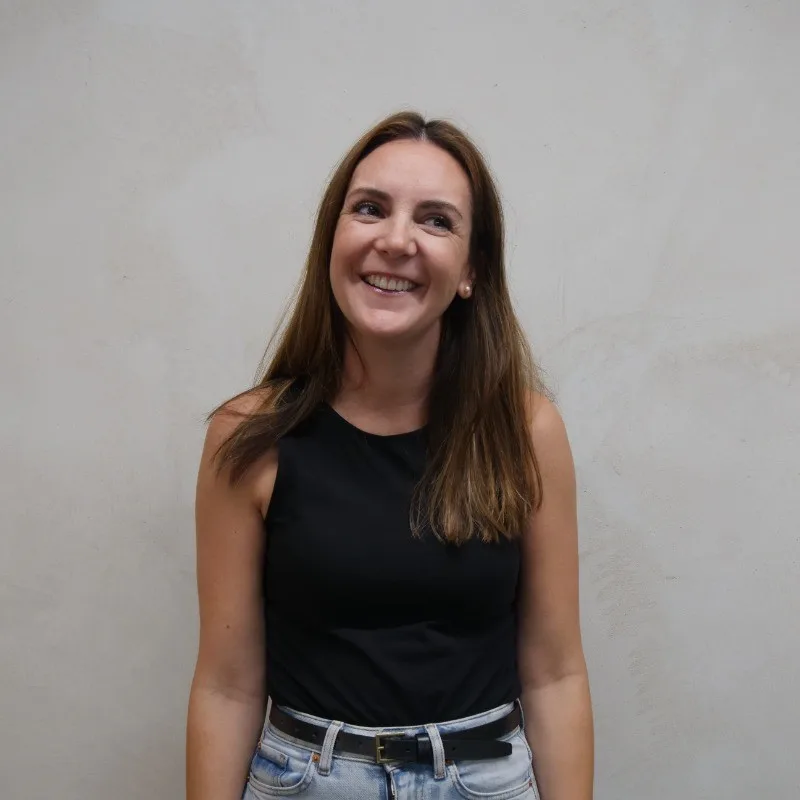
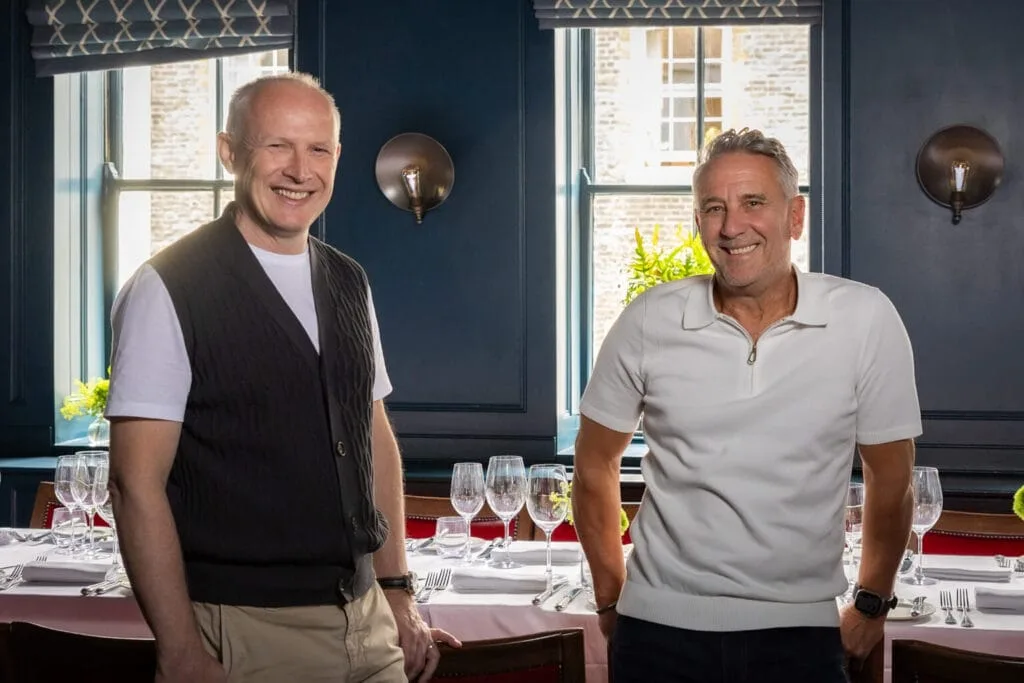
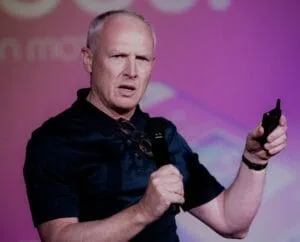
As part of our ongoing Season of Strategy, Laura Whittington, Strata’s Head of Data, is joined by Group Chief Operations Officer Phil Staines to discuss audience psychology and the power of smart data analysis
There are plenty of ways to gauge if your event was a success: attendance, sentiment, pure vibes. But what some organisers are missing is that great events create great data.
When we think about big summer events – the World Cup, F1, Wimbledon, Glastonbury – the energy is unmistakable, even from a distance. If you know where to look, you can see essential context in these events, year to year. An underwhelming Wimbledon that, when you look at the forecast, was plagued by terrible weather. An oddly quiet festival, because politics or oil prices disrupted air travel. For events at this size, we sometimes imagine that they are unaffected by context, but the opposite is true: success is informed by a diverse and fascinating array of data points.
The real value isn’t in looking at one dataset, when it comes to events. It’s understanding how different factors interact to explain behaviour.
Context changes everything
The traditional prediction that England will always lose key football matches in penalties has been upheld by generations of teams, although I’m delighted to say that wasn’t the case this year! As someone who studied sports psychology, I was fascinated to learn about Gareth Southgate’s approach to the problem as manager: he didn’t simply look at whether penalties were scored. He looked at time taken to step in, reactions under pressure, and the psychology of his players.
The more data he gathered, the more insights were revealed with the potential to inform future performance. He found that England had the quickest reaction time of any national team in penalty shootouts, almost rushing1. Without looking at that data point – how quickly penalties were being taken, not just by England but by every national team – that insight might have been lost.
There is a clear parallel here with live events and sponsored events: understanding the ‘why’ behind behaviour, capturing that data, matters as much as measuring the outcome. Learnings from sports psychology often have practical applications when we look at human behaviour more broadly.
“Successful event strategies come from profiling the right people, getting the right insights from them, rather than treating all audiences the same,” adds Phil Staines, Strata’s Chief Operations Officer. “Context is so valuable.”
Before, during, after: building a complete picture
The work of data collection needs to begin from the moment planning starts. Gathering insights into who your audience are, how they act and what they want can begin during the marketing stage, and build as you see who purchases tickets, interacts with pre-event communications and the event website, and who downloads and interacts with any delegate apps or other supporting content. Travel patterns, weather forecasts and geopolitics are useful to build in to your planning, to understand how the event can be best supported.
During the event itself, data collection doesn’t pause, especially in those at great scale like big summer experiences. Crowd movement, social media use, attendance at on-site amenities, activation engagement… these data points can provide fascinating insights and direct leads.
After the event, in addition to post-event communications, there’s now an opportunity to put all your data to work. To understand what truly drove the outcomes seen on the ground. This is where we see that Wimbledon literally performs better some years because the weather materially changes attendee behaviour, and public willingness to join the ticket queue.
When you overlay data – weather, travel, attendance and engagement, for example, you stop guessing and start understanding.
Mia: AI turning insight into action
It’s this logic that helped me and my team to design Mia, Strata’s AI-supported data management tool. Mia connects disparate sources and uncovers patterns humans may miss, and it is custom-built to each client who uses it, to ensure we’re helping organisations to move strategically beyond hindsight and towards predictive insight.
Mia can identify likely behaviours, emerging risks and opportunities in real time. “Mia can help brands with the simplest question, but arguably the most important,” Phil explains. “What should we do next?”
Beyond traditional demographics
When we consider large-scale and strategically designed events, it becomes clear that the future of data is behavioural. As we are able to move beyond traditional demographic tools like age, location or job title, we enter a much more interesting playing field: understanding motivations, sentiment, and the psychology behind decision-making.
I’m seeing emerging opportunities in data analysis around brand sentiment tracking, audience reactions and real-time behavioural signals. Tools that can analyse facial expressions, pulse and body heat, or draw behavioural data down from user’s phone use within event venues. The biggest opportunities come when organisers understand not just what happened, but why audiences behaved the way that they did.
Live events are the gold standard for gathering real audience data, even for brands that exist primarily online – there’s a reason why brands like Shein and ASOS are investing in pop-ups on Oxford street!2 Online interactions can only tell you so much; data from people in real life, interacting physically with your brand, is more powerful.
Getting the right data, the best data, is the first step, but impact comes from what you’d do next. “No matter the quality of your data, if you’re collecting data and not using it to make better decisions, what’s the purpose of having it in the first place?” concludes Phil.
Laura Whittington is Head of Data at Strata. A skilled project manager, she excels at delivering digital solutions to complex client problems, including leveraging AI to produce bespoke tools.
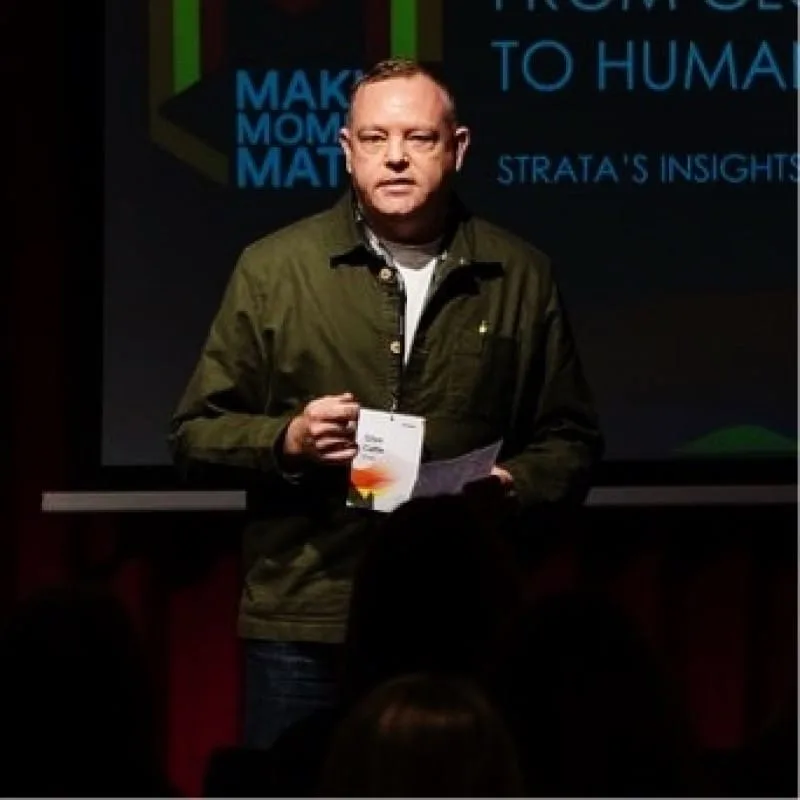
As part of A Season of Strategy, Giles Cattle (Chief Growth Officer at Strata) and Lea Karam (Founder and CEO at Mindscope) discuss what makes experiences memorable, and why that recall is so valuable to brands.
Live moments act as modern rituals. They bring people into a shared emotional context, creating a level of connection that fragmented digital channels struggle to replicate. At their best, live experiences don’t just capture attention; they stay with people. They impact how we think, what we recall, and what we carry forward. Now more than ever a strategic shift is necessary: away from attention, towards memory.
Shared emotional peaks
Live events create emotional peaks; moments that stand out because of their intensity. What makes these moments valuable to brands isn’t just how they are felt, it’s how they are shared, both in the moment and afterwards.
“Too many experiences are designed for the moment and forgotten soon after,” says Giles Cattle, Chief Growth Officer at Strata. “If a moment isn’t remembered, it hasn’t delivered its full value. The focus now needs to shift from capturing attention to creating something that lasts.”
Memory is stronger when it’s social
Memory is not formed in isolation: it’s reinforced through social interaction. What we talk about afterwards, what we revisit, what we debate; these are the mechanisms that strengthen recall. They also shape perception and meaning over time.
Equally important is how ideas spread. People are more prone to adopt behaviours through imitation than instruction; no one is taught the latest slang, yet it is gradually folded into our collective lexicon through imitation. Live environments accelerate this because behaviour is visible, shared and repeatable in real time. When you don’t know a football chant in the stands, you listen, learn, and imitate. And at the next game, you remember.
“When people recall a powerful experience, they can recreate the emotional state of being there,” says Lea Karam, Founder and CEO at Mindscope. This principle underpins The Experience Lab, a collaboration between Mindscope and Strata exploring how live moments can be designed to be not just impactful in the moment, but remembered long after.
“Experiences that are social, time-bound and emotionally intense are far more likely to stay with us and we need to be designing experiences for that,” explains Karam. Live sporting events include all three: whether in the stands or watching at home, people remember for a lifetime the moment their team was victorious.
The intense emotion around experiences like the World Cup is felt before, during and after. Brands see excellent results from campaigns that strategically add to the maelstrom of feelings, from referencing childhood memories to deliberately building on – and aligning with – the sense of excitement. This year, Adidas’ ‘Backyard Legends’ campaign was focused on street football and 90s nostalgia, with de-aged versions of icons like David Beckham, capturing social memory by referencing the beloved football of childhood rather than just sleek corporate inspiration.1
Making identity tangible
Live experiences also have the power to make abstract identities feel real. Whether it’s national identity, brand affiliation or belonging to a cause, these ideas only become meaningful when they are experienced. Events turn them into something tangible, through atmosphere, shared language and collective participation.
In doing so, they allow people to see themselves as part of something larger; not just as individuals but as members of a group with a shared understanding. Identities that exist in the abstract – being English, being a music-lover, supporting women’s sports – are suddenly tangible and real during the peak moments of events. The audience in the stands of the football arena, in the crowd at Glastonbury, watching the finals of the women’s singles at Wimbledon… they are all part of a community that is experiencing something simultaneously, and that feeling will be remembered.
The recent turnout of around 1million people – double predicted numbers – at the parade celebrating Arsenal’s first Premier League win since 2004 shows how many people consider themselves aligned not just with the sport, but specifically with Arsenal as a club, as a community and as a brand.2
The value happens after the event
The impact of live experience extends well beyond the moment itself. Highlights are replayed. Conversations continue. Opinions form and evolve. Teams reference moments internally. Audiences share and reinterpret what they experienced.
This after-effect is not incidental; it’s where value compounds. Experiences that are talked about, retold and revisited become embedded in memory and culture. That unbelievable goal, that ‘you had to be there’ moment at a gig – these are the experiences people are keen to discuss and bond over and therefore are far more likely to remember. Conversations can happen in-person or online; user-generated content like memes, reviews and online discussion is an incredibly powerful tool for raising campaign visibility and ensuring it makes a real impact.
“Memory is not individual, it is social,” Karam adds. “The things we talk about and revisit together are the things that endure. The real impact of an experience often happens after the audience has left.”
Big brands are rightly focused on user generated content and the power of memes; when the moment is replayed over and over, shared and recalled, it is remembered with clarity.
A unifying force in a fragmented world
In a fragmented, on-demand landscape, live experiences offer something increasingly rare: unity. They create shared reference points. They align audiences quickly. And they give brands a way to make strategy tangible, particularly at high-stakes moments such as launches or repositioning.
“Experiential has a strategic role to play when the stakes are high,” Cattle says. “It’s not just about communication. It’s about creating shared understanding and building trust quickly.”
As digital channels become more crowded, the brands that stand out will be those that move beyond short-term engagement and focus on what people remember… and what they share.
“Content is everywhere,” Cattle concludes. “Experiences that are memorable are rarer, and therefore more powerful. The opportunity is in creating something people carry forward, together.”
Lea Karam is the multi-award-winning behavioural scientist the world’s biggest brands and platforms call to solve challenges amidst changing cultural and technological landscapes. Through founding Mindscope, she built the behavioural science labs behind their biggest bets. Lea is one of the industry’s most-booked keynote voices, ranging from bespoke brand and corporate events to all the major industry stages, including Cannes Lions, SXSW, MIPCOM, the Royal Television Society and MAD//Fest.
Giles Cattle is Chief Growth Officer at Strata. A Creative Strategist, he uses insights to fuel the creative design of experiences and communications to engage, inspire and persuade audiences.
He brings brands and people closer together, and using every channel, internal or external, to achieve that.
He has extensive experience working with global clients spanning multiple sectors, targeting multiple audiences through multiple channels.
The Strata Group, the leading independent integrated brand experience agency group, has acquired a 100% stake in brand experience agency, We Are Collider; a leading specialist in experience-led marketing for esports, gaming and consumer engagement.
The Strata Group’s CEO, Simon Hambley, said: “Bringing We Are Collider into The Strata Group is a significant step in building an experiential network for brands and people on a mission. They deliver more than 70% of their work internationally, strengthening our global delivery capability and complementing the work our teams are already delivering around the world.
Their expertise in AI, innovation and behavioural science through Arq and MARVELs, combined with The Strata Group’s existing tools, accelerates our move into a more intelligent, tech-enabled era of experience. Together, we are creating a fully integrated offering that enables clients to move faster in a rapidly changing world.”
We Are Collider’s Founder and CEO, Anton Jerges, added:“For me, it was the culture fit first. I have known Simon and the team for a while and knew that we had shared values which is always important for me and the team. I also know that The Strata Group share our drive to deliver outstanding work to brilliant clients and I’m excited to turbo charge this, working with Wonderland, Strata and the rest of the group companies. The entire management team and I are super excited about this next step in our evolution.”
The news follows The Strata Group’s January 2026 acquisition of Wonderland – the creative global event agency currently delivering Cannes Lions events for high-profile tech and entertainment brands – and marks the next step in The Strata Group’s mission to unite all live communications and experiential skills under one network.
With other businesses in the group including strategic global experience agency Strata; venue sourcing agency, Trinity; event production company ON; and incentive, rewards and promotions specialists Element and Sherbet; The Strata Group’s aim is to provide clients with a seamless end-to-end audience engagement service that is both faster and more cost efficient.
We Are Collider will operate as a standalone agency from its existing office and will continue to service its clients including Amazon Games, John Lewis and Red Bull. Anton Jerges will remain CEO but will work closely with Strata Group President, Michael Wyrley-Birch, on developing group-wide growth and collaboration.
Strata’s Head of Pharma Operations, Sally Bradley, discusses why putting delegates front and centre of event design delivers stronger engagement, better recall, and lasting relationships.
A few years ago, I was working on a large-scale pharmaceutical conference for an international client. One of the key opinion leaders (KOLs) on the panel was also a patient advocate, living with the chronic condition he was there to discuss.
On the morning of his session, I knew from managing his travel that he had already been on an eight-hour journey and had not had any time to rest before arriving at the venue. So when I met him, half an hour before he was due on stage, I had water and snacks ready.
Because while the project had high expectations of him as a KOL, he was also a person managing a health condition. I knew that a small moment of consideration could make a meaningful difference, both to his experience and his ability to deliver the session.
That moment has stayed with me because it reflects a wider truth. Healthcare professionals (HCPs) are under increasing pressure, from junior practitioners through to globally recognised KOLs. If we want them to engage, contribute and retain what they learn, we have to respect their time, energy and individuality.
Delegate experience is no longer just a “nice to have”. It directly determines engagement, recall and impact. If the journey feels impersonal or uncomfortable, there is a real risk that even the most important educational messages will not land.
Conference success sits at the intersection of logistics, production and compelling content. Increasingly, operations teams are playing a critical role in shaping that content, ensuring it aligns with where audiences are in the drug lifecycle and how they want to engage. When operational insight is brought into content design, it creates opportunities for more meaningful, human-led experiences.
Once in the room, that human-first approach can transform outcomes. Traditional formats such as long presentations and static panel discussions still have their place, but they are no longer enough on their own. There is a clear opportunity for the pharmaceutical industry to stand out by moving beyond passive, sit-and-listen models.
The most effective conferences I have worked on incorporate:
Shorter sessions of 20 to 25 minutes to maintain focus
Incorporating movement and varied formats to sustain energy
Stand-up discussions, breakouts and structured prompts that encourage dialogue
Content designed for interaction, not just information delivery
Designing for the individual, rather than the crowd, enables deeper engagement. HCP needs vary significantly depending on their role, experience and position within the drug lifecycle, and events should reflect that diversity.
Smaller forums, such as advisory boards, give delegates a voice and create space for genuine exchange. They also strengthen the networking experience, which remains one of the most compelling reasons for attending live events.
Just as importantly, it is often the smallest touches that leave the biggest impression. Personal acknowledgement, accessibility considerations and thoughtful details all contribute to an experience that feels considered and respectful. These experiences are what drive lasting recall.
When I spoke to that KOL again several years later, he still remembered that moment of consideration and thanked me for it. It’s easy in our industry to focus on trial data, product launches and key messages. But ultimately, events are about relationships. They are platforms for connection, conversation and trust-building.
We are not just engaging today’s delegates. We are nurturing future KOLs and long-term advocates. While content matters, how people are made to feel matters just as much. In the end, delegates may not remember every slide, but they will remember how they were treated. Kindness, empathy and genuine human consideration remain some of the most powerful tools we have.
Sally Bradley is Head of Pharma Operations at Strata. With deep sector expertise, Sally is a skilled project manager with experience with live, virtual and hybrid events.
If there’s one clear takeaway from Strata’s latest Making Moments Matter live event (April 23rd, 2026), it’s that the experience economy is booming. Spotlight speaker Oliver Murray, Sales Director at Future Stores, opened by highlighting that 74% of Fortune 100 marketers are increasing their experiential budgets1, and consumers are now twice as likely2 to spend on experiences as they are on things.
With attention spans shrinking – now just 8 seconds, down from 12 in 2002 – consumers are skipping ads and actively seeking out more relevant, immersive moments. Experiences are no longer just a ‘nice to have’; they’re a critical part of the marketing mix.
Here are our key takeaways from ‘Beyond the Event: How Brands Build and Measure High-Performing Experiences’, with Giles Cattle (CGO, Strata), Oli Murray (Future Stores), and Phil Staines (CCO, Strata) making up our panel.
Takeaway One: Combating the Trust Challenge
Oli opened the session by introducing Future Stores and their ‘flagship-on-demand’ model, framing a challenge many brands face today: trust. In a crowded and often noisy selling environment, brands might be able to reach audiences, but that doesn’t mean they’re earning attention, let alone moving people from awareness to consideration and conversion.
Consumers want reassurance. They want to feel that the brands they engage with genuinely align with their values and understand their needs. This is where experiences play a vital role. They create space for meaningful, personal interaction – moments where brands can guide customers through a considered journey, rather than relying on fleeting impressions.
Well-designed experiences turn attention into engagement, and engagement into trust.
Takeaway Two: Breaking Away from The Norm
A key question discussed on stage was how brands break cycles of experiences that look and feel the same as they always have. As events move out of the shadow of media and digital – channels, particularly digital, long backed by data and measurement – they need to continue to prove their value across the funnel.
That starts with strategy. Experiences need clear intent before, during, and after the moment itself. What are you trying to change? Perception, behaviour? Without that clarity, it’s impossible to measure success meaningfully.
Event teams need to challenge the comfort of “this is how we’ve always done it” and push for creative, strategic experiences that stand out and justify their place in the marketing mix.
Takeaway Three: Before, During, and After
Measurement doesn’t start when doors open. Insight-led planning is the foundation of a high-performing experience. Audience behaviour, brand objectives, and success metrics should all shape the build from the beginning.
Future Stores spoke about designing for the full lifecycle. Before the event, brands need to be clear on who they want to attract and why. Whether it’s a product launch, brand-building, or community engagement. During the event, live data such as dwell time, footfall patterns, and social listening allow teams to adjust in real time. Why did more people gravitate towards one product over another? What’s resonating in the moment?
Afterwards, performance data should flow into an omnichannel follow-up strategy. Understanding real behaviour, not just attendance, allows brands to focus on genuine interest, measure sentiment, and prioritise quality engagement over noise.
Takeaway Four: Design for Human Behaviour
The most effective experiences are built around how people actually behave, not how we expect them or want them to.
That means understanding natural movement and decision-making, from how people enter a space to where they pause, browse, or interact. Small design choices can have a big impact on engagement; a clear takeaway following Future Stores’ decision to build two entrances in their store “as consumers want choice.”
It also requires a mindset shift. Events aren’t just about communicating to an audience; they’re about creating opportunities for connection. While leadership presentations have their place, the real value often sits in conversation: peer-to-peer interaction, breakout sessions, round tables, and informal networking moments.
As Giles shared, no one wants a 90-minute presentation when a shorter, sharper session would deliver more impact. Phil echoed this with a real-world example: as one event he worked on previously grew in size, satisfaction dropped. Bigger wasn’t better; it diluted the core purpose.
The takeaway? Audit your audience, ask better questions, involve advisors early, and treat events as part of a broader, curated customer journey, not isolated moments.
Takeaway Five: A Shift in Sentiment
For years, success was reported upwards using simple metrics: attendee numbers, impressions, footfall. That’s no longer enough.
Brands need to lay the foundations for measurement now. They must set clear objectives and map data directly back to strategy, so they can demonstrate how experiences actually shift sentiment. How are people talking about the brand afterwards? What actions are they taking online? Which parts of the experience mattered most?
When these insights feed directly into CRM, brands can qualify leads properly, personalise follow-up, and build longer-term relationships. Participation turns into perception, and perception can finally be measured as performance.
In closing, Giles asked the room how many people currently measure performance post-event. Only a handful of hands went up. But that will change. Performance is fast becoming the baseline, not attendance.
And measurement isn’t just about reporting. It shapes how experiences are designed, optimised, and delivered. From content and format to flow, coffee, and conversation, these details influence human behaviour, build trust, and create experiences that truly matter.
At Strata, we design experiences with performance in mind – from strategy and audience insight through to live optimisation and post-event measurement. If you’d like to explore how measurement can work harder for your experiences, we’d love to talk.
Our Head of Pharma Growth, Vicky Fraser, shares her insights from PharmaForum in Boston, MA.
Having been home from PharmaForum (Boston, MA) for a few weeks, I’ve had time to reflect on my experiences, and one thing is clear: the role of events is being re-examined by the pharmaceutical industry. It’s something I heard consistently in my conversations with leaders across meetings, events and procurement: there is now a far greater focus on impact, defensibility and value when planning events.
Events are being judged on impact, not activity. Across multiple sessions at PharmaForum, I saw clear pressure on teams to justify the purpose and outcome of events. Return on investment (ROI), engagement and memory are now considered more important than size, scale or production value. Events are being evaluated as investments, rather than outputs.
Procurement is shaping decisions earlier. Another recurring theme at PharmaForum was the earlier and stronger influence of procurement in event planning. Conversations have moved beyond cost to include value, defensibility and risk. Pharma wants to work with partners who understand the broader context around compliance, industry uncertainty and pressure on teams.
Uncertainty is driving smarter choices. Many attendees expressed to me that they feel they’re operating in a high-uncertainty environment. Tighter budgets, rising costs, shorter lead times and external pressures such as travel inflation and geopolitics all contribute to the pressure, and teams are being forced to make more intentional decisions around destination, duration and where investment in experience design truly matters.
Healthcare professionals’ expectations have shifted. I heard repeatedly that while HCPs’ appetite for medical education is still strong, they are very time-poor. Solutions discussed include smaller meetings, optional virtual access, and formats that build community and relevance. HCPs value the quality of the experience and the educational outcomes more than frequency or scale.
Creativity and AI can work together, alongside compliance. There is growing openness to experience-led events that respect compliance considerations, particularly when they support learning and understanding rather than spectacle for its own sake. AI was, as always, a hot topic, but it has moved beyond being considered a competitive advantage and now is an efficiency baseline for many teams. Governance, data quality and human judgement are still front-of-mind.
Finally, events are now an enterprise asset. Something I noticed at the forum was the way meetings and events are now viewed as portfolio-level assets, not isolated tick-box activities. There is an increasing emphasis on data, forecasting and intelligence that enables better decisions over time and strategic improvement of event design, rather than the retrospective reporting that has always been done.
I found that PharmaForum reinforced what I’ve been hearing from clients and KOLs: events are now about doing what is defensible, effective and genuinely valuable. The opportunity now is to do what Strata does best: support our clients in their mission, by designing meetings and events that are easier to justify internally, harder to challenge externally and more meaningful for attendees. I can’t wait to attend the next event!
Vicky Fraser is Head of Pharma Growth at Strata Creative Communications. She’s a pharma and healthcare events strategist with more than 20 years of sector experience and is passionate about strategic scientific storytelling that connects.
After his win at the German Haus Tech Start-Up Battleat SXBW in Austin, Texas, Strata Group Chief Executive Simon Hambley shares his takeaways, and why Sherbet’s simplicity makes it uniquely poised to seize the moment and make a profound impactin the rewards and incentives space.
When I attended South by Southwest (SXSW) in Austin, Texas, I wasn’t planning on presenting anything. A lifelong events and entertainment professional, I was ready just to soak in the atmosphere, represent the Strata Group and see the best the industry has to offer.
Then I had the opportunity to pitch Sherbet at the German Haus Tech Start-up Battle. I took it. And won.
The whole thing felt like a metaphor for Sherbet itself. If you’re not familiar, Sherbet is a rewards and recognition platform designed to boost employee engagement through gamification, real-time data and automated, portable incentives. In sales-driven industries, rewards and commission are often essential for motivation, team building and performance, but historically juggling commissions and incentives has been expensive and inaccurate.
A complex problem that wastes money is an opportunity, not unlike the opportunity to stand up and pitch at a global event like SXSW. And, like the judge’s feedback on Sherbet says, the solution is… simple.
One platform, built into the sales journey from purchase through to incentive. Tracked accurately, giving insights into sales behaviour – and, critically, behaviour changes. Has your incentive offer actually motivated sales? Have you successfully rewarded your employees for changing up their approach, for modernising, for hustling? Sherbet displays clear answers for everyone involved.
There is an opportunity within the world of sales incentives that Sherbet pitches to. And, as we’ve seen time and again, it wins.
I had a fantastic time at SXSW and I’m already looking forward to next year’s event. Here’s to many more opportunities seized by Sherbet and the rest of the wider Strata Group.
Simon Hambley is Chief Executive of the Strata Group. An experienced events and marketing communications specialist, Simon is an entrepreneur and business manager with a track record of start-up success, managing fast growth, business transition and change management.
Strata sits down with Head of Pharma Growth, Vicky Fraser, to talk industry changes and opportunities for creative, insight-led engagement in a sector led by compliance concerns
The pharmaceutical industry and healthcare as a whole are experiencing huge changes right now. What do you see as the biggest shifts disrupting the current landscape?
With the rise of generative AI, I’m seeing a lot more appetite for authenticity and creativity led by real humans, and luckily, that’s exactly what we do at Strata! I think the industry has woken up to how ‘noisy’ the digital space can be, and how healthcare professionals (HCPs) are increasingly selective with their time and attention. At Strata we have the benefit of cross-industry experience, and I’d say the trend across the board with high-value audiences is that they need better storytelling, whether in the content they’re consuming or at in-person events.
How do you balance innovation with compliance when designing engagement programs?
We’re lucky at Strata to have over 20 members of staff working specifically to support healthcare industry clients. We have a deep sector fluency and understanding of compliance concerns, so both are baked into our approach from the very beginning. Once we know what the story is, and why the s audience(s) should be interested, we’re able to really dive into the creative process.
One key benefit to all our experience across other industries – such as tech, automotive and professional services – is that we can draw on examples of creative approaches that have provably achieved their goals and look at them through a ‘healthcare lens’. This enables us to come up with concepts for healthcare clients that can truly cut through the noise and connect with their audiences.
What benefits are there to healthcare sector clients to working with an agency like Strata which is part of a wider Group?
The structure of The Strata Group means that our clients benefit from both a wide pool of capabilities and a real depth of knowledge – we’re able to deliver at speed globally across multiple facets of brand engagement through maximising resources through the Group. Across the Group we have a team of experts within the healthcare sector with a deep understanding of compliance and governance, but the single touchpoint of Strata ensures brand guardianship, reduces silos and provides a single trusted partner. We’re able to give our clients a senior-led, bespoke service.
From a purely practical standpoint, the Group gives us stronger negotiation powers and allows us to offer clients cost efficiencies across areas such as event space bookings and logistics.
Do conferences and other in-person events aimed at HCPs still have value in an increasingly digital world?
It’s because we’re in a digital world that they do! People – HCPs included – are really eager for opportunities to make in-person connections and have authentic offline experiences. We’re also so inundated by information online that messages communicated during in-person events just hit different – it’s something we hear again and again from event attendees. The quality of engagement is better at in-person events, too – we find that HCPs in particular take on more key information and appreciate the opportunity to interact with key opinion leaders and their peers.
Conference burn-out is real, though, which is why our clients see the best return on investment when they’re willing to get creative and dedicate resources to ensuring their event attendees have the best experience, make valuable professional connections, and take home the most important messages.
How does Strata approach measurement and return on investment to show the real value of engagement?
Events are now one of the most provably powerful accelerators of business growth, but it takes a lot of insight and experience to make them deliver their full potential. At Strata, we like to provide clients with innovative proof of performance: we produce work that inspires audiences to act differently, accelerates pipelines and strengthens relationships.
It’s no longer just about isolated KPIs – data has evolved into a narrative that shapes KOL engagement, informs strategy and elevates experiences. I’m a big believer that stronger measurement can unlock optimisation opportunities and strategic value. If you’re interested in specifics reach out – I’d love to give you some examples.
Vicky Fraser is Head of Pharma Growth at Strata Creative Communications. She’s a pharma and healthcare events strategist with more than 20 years of sector experience and is passionate about strategic scientific storytelling that connects.
Proud to deliver lasting moments for...
Let’s have a chat!
Every brand touchpoint is a moment that matters. A chance to strengthen your message with clarity and relevance. To make your audience feel like they're part of something extraordinary, get in touch.